
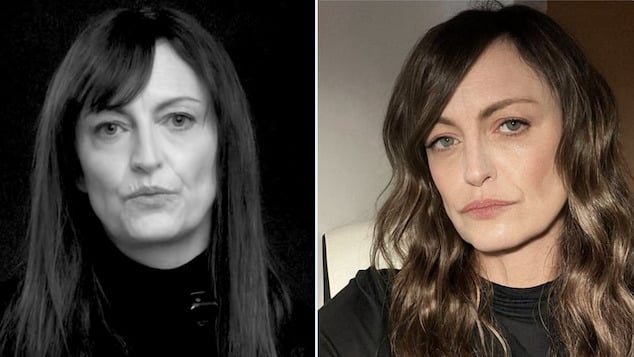

Claire Brosseau, Canadian actress afflicted with debilitating mental health woes sues for right to assisted suicide after saying depression has made life unbearable and treatment has failed her. The suit raises the moral dilemma who should have the right to right to end their life and that Canada’s MAID program should not only be limited to those afflicted with physical conditions.
An acclaimed Canadian actress afflicted with a debilitating mental illness and depression has sued the government for the the right to die, arguing that her ongoing mental health woes has made living unbearable.
Claire Brosseau, 48, who juggled bouts of career success only to be undermined by recurring bouts of depression according to a report by the New York Times has indicated that she is now seeking the legal right to assisted suicide.
Canadian actress struggle with mental health
The actress best known for her appearance as Jenny Reynolds in the 2006 romcom A Previous Engagement and other Canadian show engagements told the publication she was first diagnosed with manic depression when she was 14 years old, before going on a wild drug, alcohol and sex-filled bender.
Brosseau would later be identified as having anxiety, chronic suicidal ideation, an eating disorder, personality disorder, substance abuse disorder, PTSD, and a slew of other mental health conditions.
She attempted suicide countless times and has been treated by psychiatrists, psychologists, and counselors across North America, according to an open letter published on her Substack earlier this year.
She has tried dozens of medications, therapies and guided psychedelics in an attempt to improve her mental health, but to no avail.
Brosseau, who has neither a partner nor children, decided in 2021 that she would apply for euthanasia under Canada‘s Medical Aid in Dying (MAiD) program.
Has assisted dying in Canada gone too far?
The law allows ‘eligible adults’ to request assistance from a medical professional to end their life, legal since 2016 after court rulings struck down prohibitions. Originally for those with foreseeable death, the law expanded in 2021 (Bill C-7) to include those with grievous, irremediable conditions where death isn’t imminent, but eligibility for sole mental illness has been delayed to 2027 after initially scheduled to be pushed through in 2023, then again in 2024.
Brosseau has since filed a complaint with the Ontario Superior Court alleging genuine rights violations.
Brosseau was an honors student at her Montreal high school, starred in plays and was relatively popular. She graduated at 16 and was recruited to attend an elite drama college in Quebec, where she studied theatre performance for two years. After graduation, the thespian moved to NYC and continued her acting studies at the Neighborhood Playhouse School of the Theater, the dailymail reports.
She gained steady work in musicals and films and gained good money in a line of work that leaves many struggling to make ends meet.
Roller coaster career and emotions
But just as she started to make a name for herself, she suffered another depressive episode that saw her struggle to eat and leading to her drowning herself with booze and drugs.
Brosseau moved back to Montreal in her early 20s and was hospitalized for several months. And as her mental health began to improve and her career once again started to thrive.
She appeared on Entertainment Tonight Canada and The Strombo Show, a radio show hosted by Canadian broadcaster George Stroumboulopoulos, Macleans reported.
She landed supporting roles in film and TV projects with James Franco and Daniel Stern, secured a deal with a comedy club chain, acted in commercials in Los Angeles and even got some writing gigs.
Although she was earning a lot of money and she even landed her ‘dream part’ in a European film, Brosseau said her mental health conditions still impeded her success.
‘I had a great place to stay and I was doing well on the film and I was having fun on set, and every night I would go back to my hotel and I would bawl and scream and rip my clothes apart.,’ she told the NY Times.
‘And cry and just — I wanted to kill myself and I couldn’t wait to get out of there. And then the next day at work, I’d be fine and I’d have so much fun.’
Claire Brosseau lawsuit triggers moral dilemma debate
Brosseau vowed to get her life together after she stumbled and smashed her face into a curb at the 2016 Canadian Screen Awards. She had been drunk and high on cocaine, according to Macleans.
She got sober, underwent treatment at an intensive psychiatric care unit and began a series of therapies. She also started taking prescribed antidepressant, antipsychotic, and anti-anxiety medications.
The actress remained in what she described as ‘remission’ for several years, but in 2021, as her career hit a low point, she attempted suicide again.
Brosseau says her mental health was so poor that she once ate peanuts, despite being allergic to them, in the hopes of triggering a fatal reaction.
She decided to pursue MAiD shortly after that, under the belief that it would be eligible for mental health patients in 2023.
She hosted a series of ‘farewell dinners’ with her friends, family and closest colleagues in which she revealed her intentions to end her life.
Brosseau, alongside former war correspondent John Scully, who suffers from PTSD, is now suing the Canadian government for the right to die.
She has asked for ‘the same rights as others with incurable illnesses to choose when and how I die’ and alleged the current assisted suicide MAiD law is discriminatory. But is it?
The law has triggered much debate as to whether the government should legalize suicide for those enduring quality of life issues, even mental woes, given the argument that there treatment exists to improve the patient’s condition unlike a terminal physical illness or cancer.
While many oppose assisted suicide for mental health conditions, Dr Gail Robinson, a professor of psychiatry at the University of Toronto, believes MAiD is a reasonable choice for the debilitated actress.
Robison said she would ‘love’ for Brosseau to change her mind, but ‘will support her’ if she does get the green light for MAiD, according to the nytimes.
However, the actresses other psychiatrist, Dr Mark Fefergrad, said ‘I believe she can get well’ and added that ‘I don’t think MAID is the best or only choice for her.’
Fefergrad believes that given the nature of her illness, Brosseau’s request for MAiD has to be considered differently from requests from patients with physical ailments.
Canadian authorities have not indicated if they intend to once again push back the threshold of mental health woes as a precursor for assisted suicide beyond 2027.
Related posts:


