

This a tricky one. I’ve loved the show Community since I first caught the pilot, and I think it’s a brilliant comedy. Their latest episode, however, deals with a serious issue in their trademark silly way and (accidentally?) created a *damn* fine half hour of television. I proudly give you Advanced Dungeons & Dragons.
The whole thing plays like a twenty-one minute Lord of the Rings, and it does so gloriously. One of the show’s greatest strengths is how easily it slips out of one adopted genre into another. The Action Movie and Zombie Horror episodes must be seen to be believed.
Anyway: The show elegantly, deftly maneuvers around a very sensitive topic in a way that is both simple and deeply resonant. For starters, they never say the ‘S’ word, but it’s made perfectly clear that’s the issue at hand—and it’s just a damn funny sitcom. My hand to God, it’s got layers. The writers entirely know what they’re doing, but I want to address something that isn’t necessarily clear to viewers. It might have slipped under the radar… because it certainly did for the characters.
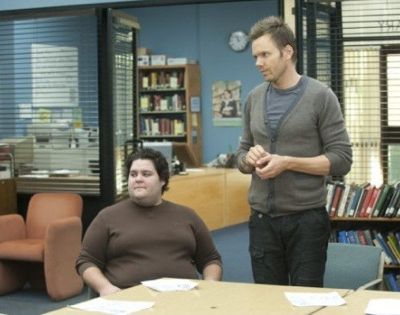
I’m gonna bring it up now, and circle back ‘round to it because I want you to be with me on this (at least as much as I understand it):Suicidal thoughts don’t stem from just depression. They stem from loneliness. The two feelings can have a lot in common, but at their core they’re very, very different. And they look a lot alike.
The episode concerns Fat Neil, who’s been feeling down. Whenever Fat Neil is addressed, it is always Fat Neil. It’s a deeply cruel nickname, but it’s also one that sticks. Even after the day is saved, the narrator still calls him Fat Neil. So ‘Fat Neil’ it is.
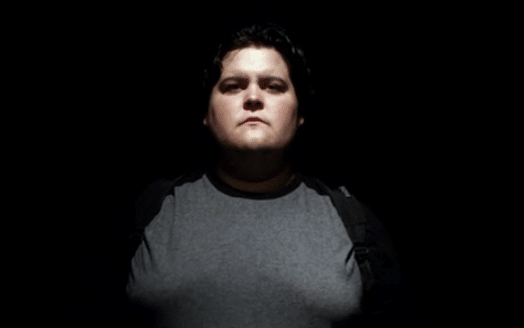
When we first lay our eyes on Fat Neil, he’s standing alone in a field of black. We eventually see him surrounded by people, but it’s clear this is how he feels. The other characters catch on that he’s depressed when he gives away a prized possession, a worn stack of Dungeons & Dragons guidebooks.



There are 12 million illegal immigrants in the USA.
http://www.reuters.com/article/idUSN0731888120080208
People are complaining about how they take jobs, don’t pay taxes, break the law, and burden social services, but almost no one is doing anything about the problem. Some of the solutions that have been proposed so far are unconstitutional and illegal. Arizona, for example, has a law that allows the police to racial profile and stop people simply because they look like immigrants. This law is discriminatory and violates the Fourth Amendment prohibition against illegal search and seizure without probable cause. What does an illegal immigrant look like anyway? Another suggested solution to stop illegal immigration is to deny the children of illegal immigrants citizenship, but clearly violates the 14th Amendment that states that all persons born or naturalized in the United States are citizens. What would make someone more American than being born here? Other solutions against illegal immigration that have been enacted by towns forbid illegals from renting homes, but violate the Fair Housing Act prohibition against discrimination.
Since many of the suggestions to deal with illegal aliens so far are illegal, I propose
the following better solutions:
1. Add immigration agents to patrol the border.
2. Require all employers to use E-verify to verify that all employees are legal.
3. Increase fines on employers who hire illegal immigrants.
4. Do not allow illegal immigrants to have drivers’ licenses. Do not allow them to pay in-state tuition or receive government benefits. Do not make the lives of illegals easier or reward them for breaking the law.
5. Call the police if you find someone playing loud music, stealing, vandalizing property, drinking or urinating in public, doing drugs, littering, loitering, or illegally keeping chickens in the city. Regardless of whether the lawbreaker is or isn’t an illegal immigrant, the broken windows theory of crime says that small crimes lead to bigger crimes and less respect for the law. Why have a law if it is not enforced? Someone who violates the law by living in a country illegally is probably not going to care about obeying other laws. Any illegal immigrant who is arrested should be deported. If illegal immigrants are hassled enough maybe they will leave on their own or at least try to fit in a little more. I grew up in a small American town and I have seen the bad effects of illegal immigration myself.
http://www.greeleygazette.com/press/?p=5279
6. Build more illegal immigration detention centers and deport the illegal immigrants that are here. Maybe deporting millions of illegal immigrants is not practical, but we can deport more. If the USA can put on a man on the moon, why can’t we defend our borders?
Of course reducing illegal immigration costs money so I suggest raising visa fees for foreigners, increasing sin taxes on alcohol and tobacco, reducing the wages of government workers, cutting welfare spending, ending government farm and airline subsidies, decreasing the defense budget, and eliminating less important programs like Amtrak, PBS, and the National Endowment for the Arts. We should stop extending unemployment benefits, deport the illegal immigrants, reduce legal worker visa quotas, and require unemployed Americans to take jobs in farming, meatpacking plants, construction, landscaping, and hotels. If 14 million Americans are out of work, 12 million illegal immigrants shouldn’t be taking up the jobs.
The United States is a nation of immigrants, but these are modern times with rules and regulations. Immigrants need to respect these rules. The USA does not have room for all the people in the world. Do you want America to have a population of 1 billion like China?
We don’t need new laws, we just need to enforce the existing laws.
Write your representatives, contact the media, and talk with your friends and family about this crisis. Tell them that we have had enough of illegal immigrants. Nothing will change if nothing is done and the government won’t care if you don’t care.
http://www.usa.gov/Contact/Elected.shtml
This is very interesting, and thank you for pointing it out because as a casual viewer who knows little of depression I indeed missed it, but the way you lay it out it seems obvious you’re completely right. Knowing the show is capable of this level of subtlety makes me see everything about Pierce lately in a new light.
It also reminds me of the episode where Shirley has Pierce kicked out of the group and then leaves herself. The “heartwarming reconciliation scene” featured Pierce saying he respected Shirley more than anyone in the group did, which, really. “My lack of respect for you is proof that I respect you more than anyone, especially those others who disrespect you by actually paying attention to your feelings” is probably on a list somewhere and it should die.
And given Shirley’s tone when she responded she seemed to feel that way too, yet they still reconcile. At the time I didn’t know if Pierce’s line had actually worked or if there was some other undercurrent that made Shirley forgive him, but given their subtlety in this episode I’m now leaning more towards the second explanation.
I still don’t know what that undercurrent was though…
Very nice article. I agree with Nae in that you’re oversimplifying the nature of depression/loneliness somewhat, however, your article and the point you’re making is far more effective for doing so. I think issues like depression and loneliness can be very different for different people, yet they are best understood when viewed through individual perspectives. In other words, you can learn more about depression by seeing it through the eyes of a single depressed person than by reading a textbook on the subject written by a team of psychologists. So thanks for sharing your perspective.
I’m not sure I entirely agree with what you’re saying about the episode by the way. Yes, the narrator says Pierce saved Neil and you’re right about one of the ways he saved him. Pierce also saved him by being the villain and uniting the group against a real foe. Remember, Neil has played D&D many, many times before. It has not saved him before. A simple game of D&D cannot save him now (your right that the gang does not get this). But in this particular game Neil became part of a real team united against a real foe. This was not just a Friday night hanging with a bunch of guys playing make believe and arguing over rules and die rolls. This was a real adventure for Neil, as real as its going to get anyway, and he helped save the day as part of united team. I’d say the point about Neil seeing that Pierce also feels loneliness reinforces the episode’s theme, not defines it. Either way, awesome episode. And again, thanks for a nice article.
PS: I was also directed here by the AV Club’s VanderSmurf. Peace.
Thank you for such an illuminating review of the episode. I think that your intuitions are dead on, in that they echo my experience with the negative feelings as well.
tightropewalkerr- So what if his definitions didn’t match up with the arbitrarily line drawn between the psychological concepts? They captured something more personal and meaningful. You are one rude dude.
Tightropewalkerr,
Thank you for your comments. For the record, I make no claims of being an expert. I’m just writing from my own personal experience.
I’m fully aware that depression and suicide are sensitive topics. It’s why I chose my words carefully. I agree that the *symptoms* of depression vary far and wide, but I never brought up the symptoms. Only their natures, their causes.
I’ve been clinically depressed before, because of external and internal things, and I’ve also experienced deep, intense feelings of loneliness. I re-state my belief that they’re two different things, and that Fat Neil was suffering from the latter. Watching the episode, I found my theory ‘fit’ the evidence. By all means, feel free to disagree.
Why did I thnk it was loneliness and not depression? Simple: Pierce never apologizes for his remarks. He makes *no* attempt whatsoever to make Fat Neil feel better about himself, at all. (This is good, because he wasn’t responding well to pity.) Instead, Pierce directs his attention to the group and lashes out. “Invite me to your crap.”
Fat Neil saw that he had *something* in common with Pierce, and Pierce isn’t depressed. He’s lonely. He’s *said* as much before, since his mother died.
As for loneliness and the belief that things won’t improve: it’s something I’ve experienced firsthand. It was painful, it was persistent, and it soured everything else when I was feeling it. In two words: it sucked.
I applaud ‘Community’ for illustrating that things can get better for people like Fat Neil; people who are depressed and lonely. I wrote the article to articulate *how* he got there, because it was left unclear. Which is fine, it’s a sitcom. 21 minutes isn’t very long to get into very deep matters.
I hope this clears things up a bit.
C.
Do you have any credentials that warrant the pedantry on display in this article? Or are you simply talking out of your ass?
I’ve no idea why you think a symptom of loneliness is the belief things won’t improve. And why you try to reduce depression, something that varies symptomatically among individuals, to a single check-box is beyond me.
Great write-up of perhaps my favorite show on the TV right now (definitely my favorite comedy). Just so you know, Casey Jones, I came across this because of a positive reference in AVClub’s Todd VanDerWerff’s write-up of the newest episode of the show (at http://www.avclub.com/articles/early-21st-century-romanticism,51562/). So lots of outside love for you, too.
Well done on an interesting and thoughtful article.
I have to disagree with a couple of points though.
“Depression is anger pointed at yourself“. Self-directed anger is likely a component of depression for many people, but is certainly not the whole story. I also wouldn’t award loneliness the ”despair“ trophy either.
Rather than two completely separate entities, I see a symbiotic relationship. Loneliness feeds depression feeds loneliness. A vicious circle. Or a Venn Diagram that is mostly overlap, perhaps.
Cheers & No Troll.
Nae.
Thanks! I certainly will.
Sweet Jeebus that was an excellent post! Aside form the astute analysis of one of my favorite shows, it was a very good article on a problem that seems to be growing legs for people of all ages. Kudos and keep on writing!